
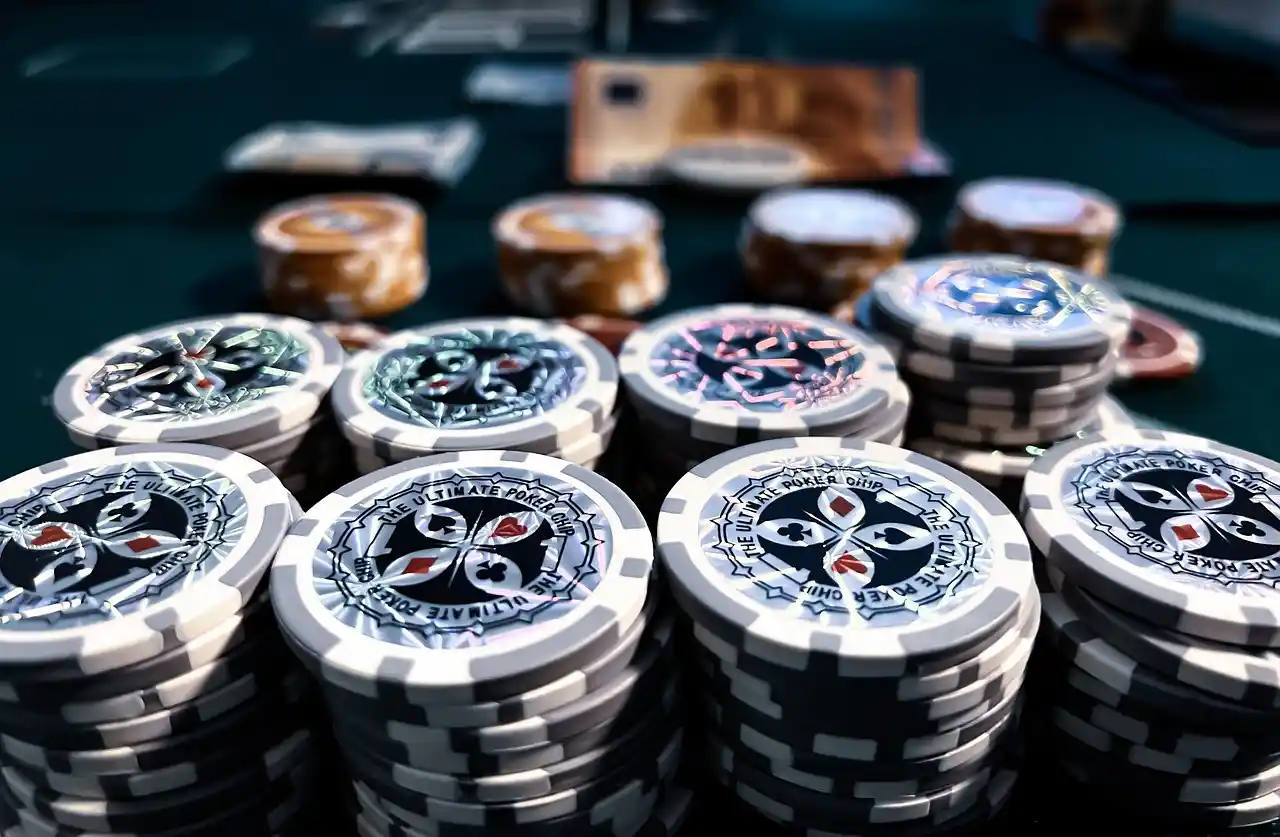
Top Cryptocurrencies Accepted at Online Casinos in 2026
Crypto gambling has grown fast over the past few years, and the range of coins accepted at online casinos now reflects that growth. Where players once needed Bitcoin to fund a casino account, they can today deposit with dozens of different assets, each carrying its own speed, fee structure, and privacy profile.
Not every coin performs the same way at the tables. Some process faster, some cost less per transaction, and some hold their value more steadily while you play. Here are seven top cryptocurrencies accepted at online casinos in 2026, explained plainly so you can pick the one that actually fits how you gamble.
1. Bitcoin (BTC)
Bitcoin is still the default deposit method at more online casinos than any other cryptocurrency. Its widespread adoption also makes it easy for players to find sites where BTC is supported for both deposits and withdrawals. As an example, a licensed Bitcoin casino like BC.GAME or JB Casino accept BTC alongside more than 150 other coins, underscoring how central Bitcoin remains to the category, even as platforms continue to expand their coin lists. BitStarz built much of its early reputation on Bitcoin deposits, and BTC acceptance has been a baseline expectation in this space for nearly a decade.
The practical reality of using Bitcoin at a casino is that confirmation times shift with network congestion. Deposits typically clear within 10 to 30 minutes depending on the fee you attach, and withdrawals follow a similar window. The trade-off is familiarity. Bitcoin wallets are widely available, the coin’s legitimacy is well-established, and most US players already own some; for anyone new to crypto gambling, starting with BTC means you don’t need to learn an unfamiliar blockchain before you play.
2. Ethereum (ETH)
Ethereum processes transactions faster than Bitcoin and supports smart contracts, which matters if you play on platforms that use on-chain provably fair mechanics. Withdrawal speeds at most casinos run 5 to 15 minutes for ETH, and network fees – called gas – have dropped since Ethereum’s 2022 merge to proof-of-stake, though they can still spike during busy periods.
Casino operators prefer Ethereum because it integrates cleanly with decentralized tools and the NFT-based loyalty programs some platforms launched in 2025. As a player, the main thing to watch is gas fees before you send a deposit. On a $50 transaction, a $3 to $5 gas fee is meaningful. On a $500 deposit, it’s noise. Ethereum suits mid-to-high-volume players who move larger amounts less frequently, not players reloading in small increments every session.
3. Litecoin (LTC)
Litecoin was designed as a faster, cheaper alternative to Bitcoin, and at online casinos that positioning still holds. Transactions settle in roughly 2.5 minutes on average, and network fees run a fraction of what Bitcoin charges. Most casinos that accept BTC also accept LTC, making it an easy swap for players already comfortable with Bitcoin’s structure.
For US players, Litecoin’s speed matters because it shrinks the window where funds sit unconfirmed. Depositing to a casino and waiting 20 minutes to play is a real friction point, one Litecoin largely eliminates. It doesn’t carry Ethereum’s smart-contract capability or Bitcoin’s name recognition, but for pure payment utility, getting money onto a platform quickly and cheaply, LTC is one of the most practical options in 2026.
4. Tether (USDT)
Tether is a stablecoin pegged to the US dollar, which means your balance doesn’t change value between the moment you deposit and the moment you withdraw. That’s a major advantage over holding BTC or ETH in a casino wallet, where a 10% price swing during a single session can affect how much you actually walk away with.
Most major casinos accept USDT on multiple blockchains, Tron (TRC-20), Ethereum (ERC-20), and sometimes Solana or BNB Chain. The TRC-20 version carries the lowest fees of the three and settles quickly, making it the preferred network for casino deposits. The catch with Tether is counterparty risk: USDT relies on Tether Limited maintaining its reserves, and while the coin held its peg reliably through 2025 and into 2026, it isn’t risk-free in the way that holding native crypto is.
5. USD Coin (USDC)
USD Coin fills the same role as Tether, a dollar-pegged stablecoin that protects you from volatility while your funds are on a casino platform, but it operates under stricter reserve auditing through Circle and Coinbase. Some players prefer USDC because of that transparency, even though the gameplay experience is effectively identical to USDT.
You’ll find USDC accepted at most crypto-forward casinos in 2026, usually on Ethereum and Solana networks. The Solana version processes in under a second and costs a fraction of a cent per transfer, genuinely frictionless for frequent depositors. USDC suits players who want stablecoin convenience but feel more comfortable with an audited, regulated issuer behind the coin they’re using.
6. XRP
XRP settles in 3 to 5 seconds and charges fees measured in fractions of a cent, which makes it one of the fastest and cheapest cryptocurrencies available for casino deposits. It doesn’t require miners or gas, so the cost of sending XRP is predictable regardless of network activity – something Bitcoin and Ethereum users don’t always enjoy.
Acceptance has grown since Ripple resolved its long-running SEC dispute in 2023, which lifted a major regulatory cloud that had made some platforms reluctant to list the coin. By 2026, XRP appears at a solid majority of crypto casinos and is especially common on platforms catering to players who move money frequently. One friction point worth knowing: some exchanges still require a minimum XRP reserve in your wallet, so new users should check their wallet’s reserve requirement before setting up for casino use.
7. Dogecoin (DOGE)
Dogecoin started as a joke in 2013, but it has settled into a legitimate place in the crypto casino ecosystem – particularly among casual players who want low-cost transactions with no pretense about store-of-value dynamics. Transaction fees run well under a cent, confirmation times average around a minute, and DOGE carries enough liquidity that most larger casinos support it without issue.
DOGE belongs on this list for pure practicality. Many casual crypto gamblers hold Dogecoin because they bought it cheaply and never converted it; casinos that accept it directly mean those players don’t need to swap into Bitcoin or Ethereum and pay exchange fees before funding an account. DOGE also works well for smaller deposits and session-by-session reloads, where low denomination and minimal fees make more financial sense than sending fractional Bitcoin.
Conclusion
The top cryptocurrencies accepted at online casinos in 2026 cover a real range of use cases: Bitcoin for broad compatibility, Ethereum for smart-contract platforms, Litecoin and XRP for speed, Tether and USDC for stability, and Dogecoin for low-cost casual play. Your best choice depends on what you already own, how often you move funds, and how much fee variation you can absorb. Check that any casino you use clearly lists its supported networks before sending a transaction; the same coin on the wrong chain can mean lost funds.